



Learn how to organize a small or closet-style pantry with practical storage ideas, decluttering tips, and simple systems that actually work in real life.
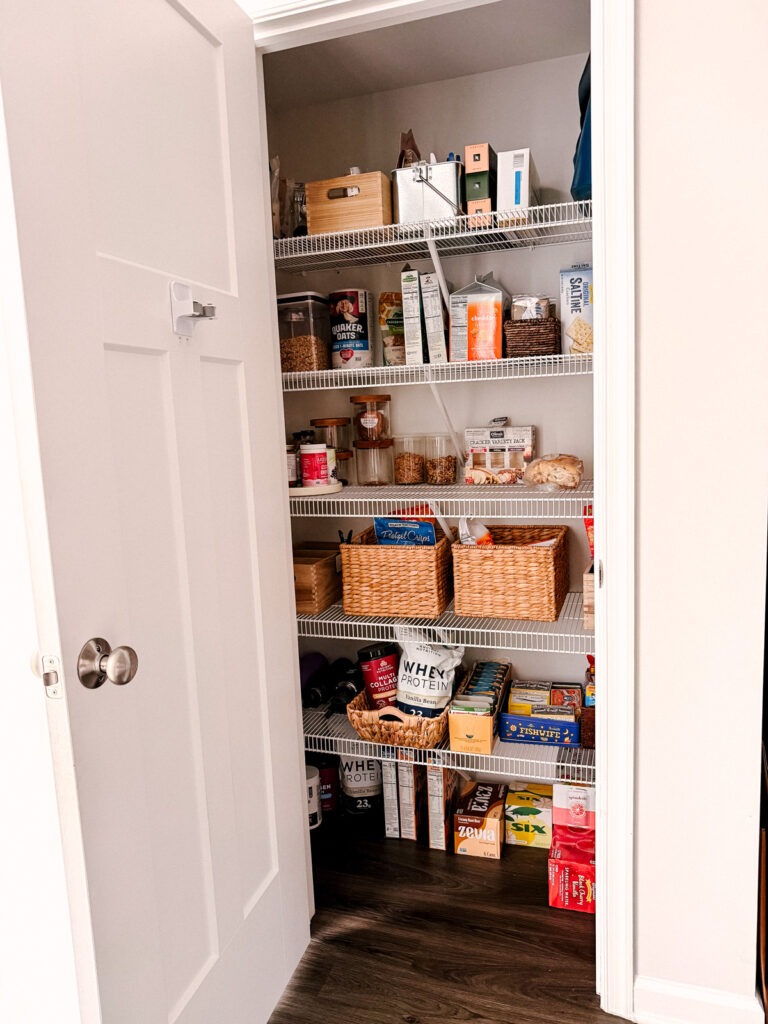
Welcome to my new pantry!
If you’ve followed along here for a while, you know I love a good organizing project—especially when it comes to the kitchen. But recently, I had to rethink a lot of my systems after moving into a smaller house with a much more compact, closet-style pantry. Gone was my walk-in pantry with room to spread out, and suddenly every inch mattered again.
When I moved in, I shoved everything I brought on a shelf and closed the door. An organized pantry was not as high of a priority as assembling a bed to sleep on! But a week later I came back and started to plan out where each category would go. One beautiful silver lining: fewer people = less food = less to organize.
I had routines that worked really well in our old space, and squeezing everything into a narrower pantry meant letting go of a few habits and starting fresh. Smaller pantries can actually be easier to keep organized when everything has a clear purpose and place.
With the right approach and a few handy tools, you can transform even the tiniest pantry closet into a functional, calm space where you can actually find what you need, when you need it.
Here are some small pantry organization ideas—updated for real-life, closet-style pantries—along with practical tips, organizing product recommendations, and strategies that have helped me keep my new pantry organized (so far!)
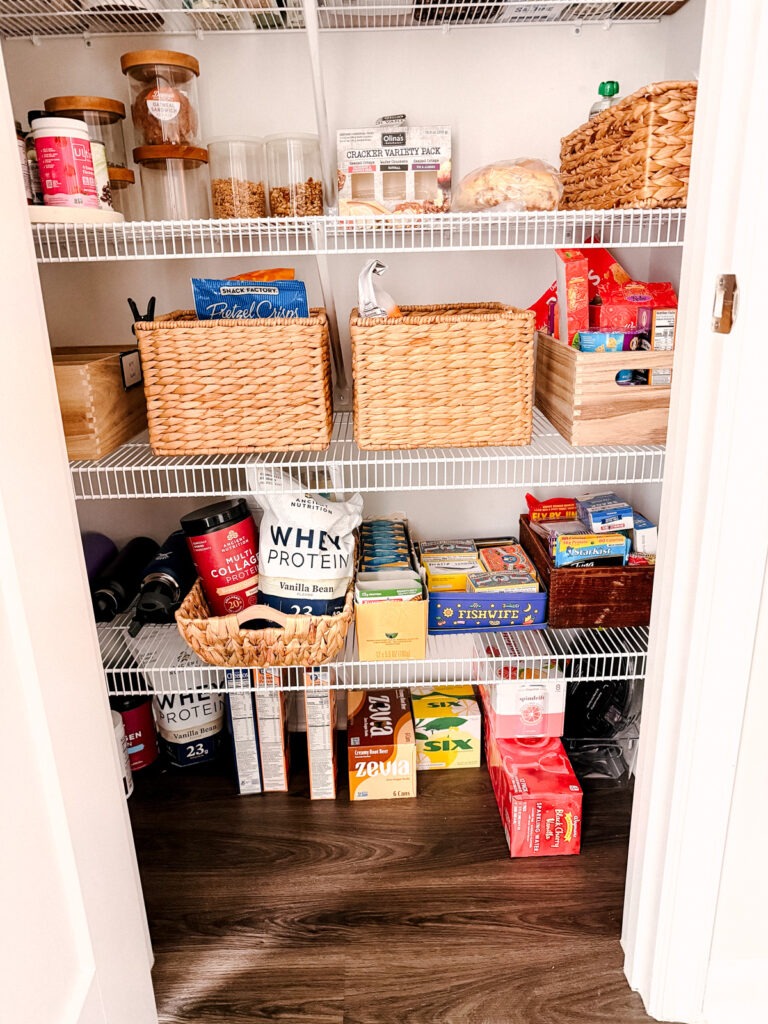
Why Small Pantry Organization Matters
If you’ve ever stood in front of your pantry wondering where that can of tomatoes went—or discovered three expired boxes of pasta shoved in the back—you’re not alone. Small pantries can quickly become chaotic, cluttered spaces that make meal prep more stressful than it needs to be.
My #1 biggest tip: don’t store more than what you actually need.
Every extra box, every duplicate can, every half-used bag of something adds up fast. A disorganized pantry isn’t just annoying—it’s expensive and stressful. When I can’t see what I have, I overbuy. How many cans of beans do you actually need to keep on hand? An organized pantry makes meal planning easier, and cuts down on food waste.
How to Organize a Small Pantry (Even a Closet-Style One)
Step 1: The Great Pantry Purge (Yes, You Really Have to Empty It)
I know this step sounds overwhelming, especially if you’re already short on space. But trust me—this is the most important part of organizing a small pantry. You have to know exactly what you’re working with before you can make it functional. I wish I had photos of mine, but it was done so furiously that I didn’t stop to photograph it! But I pulled EVERYTHING out and decided to toss out some things in the process, too.
I like to do this right before a grocery trip, when my pantry is as empty as it gets. I pull everything out and spread it across the counter. Seeing it all at once is eye-opening.
As you go, check expiration dates and get honest with yourself if you haven’t consumed something in the last year, are you ever going to? If I bought something for one recipe and never used it, it probably doesn’t deserve precious pantry real estate.
Once the pantry is empty, I wipe down the shelves and vacuum the floor. Starting with a clean slate makes the whole process feel more intentional.
The Best Divider Baskets
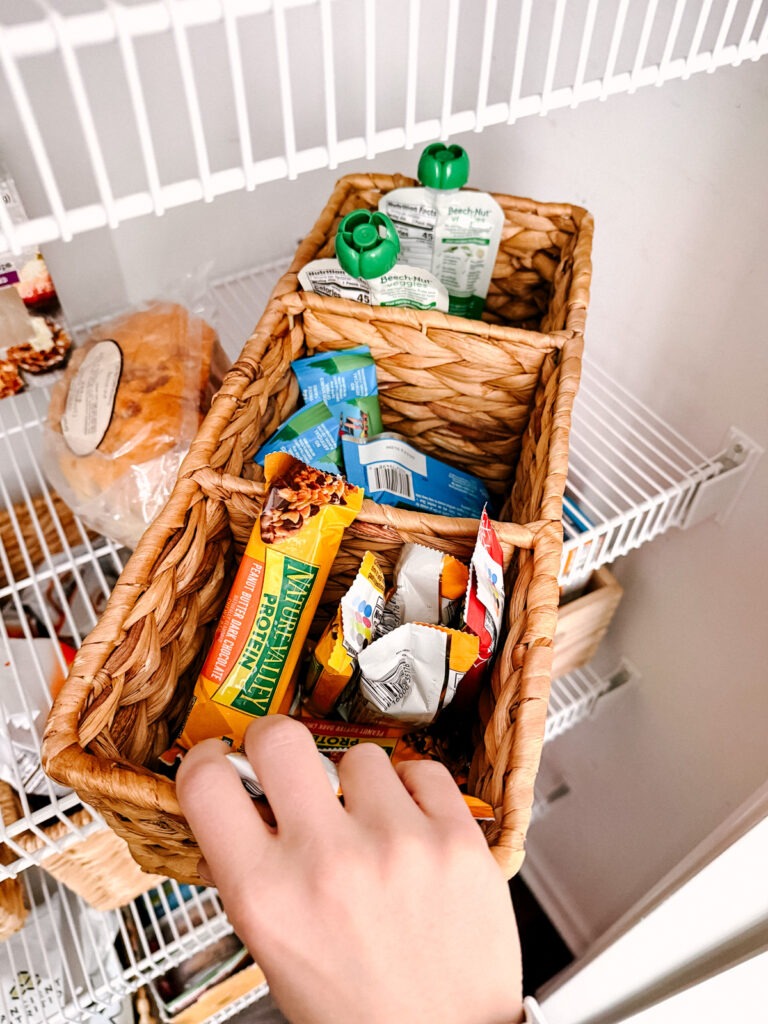
Step 2: Create Pantry Zones (Think Like a Grocery Store)
The biggest shift I made after downsizing was being very intentional about zones. In a small pantry, everything needs a clear home. And also because of the limited vision line, I really do need to be able to SEE everything. While I could store more things on my shelves (because they are deep), I also don’t want to obstruct the view of things in the back sides. Clear bins can help with this, too.
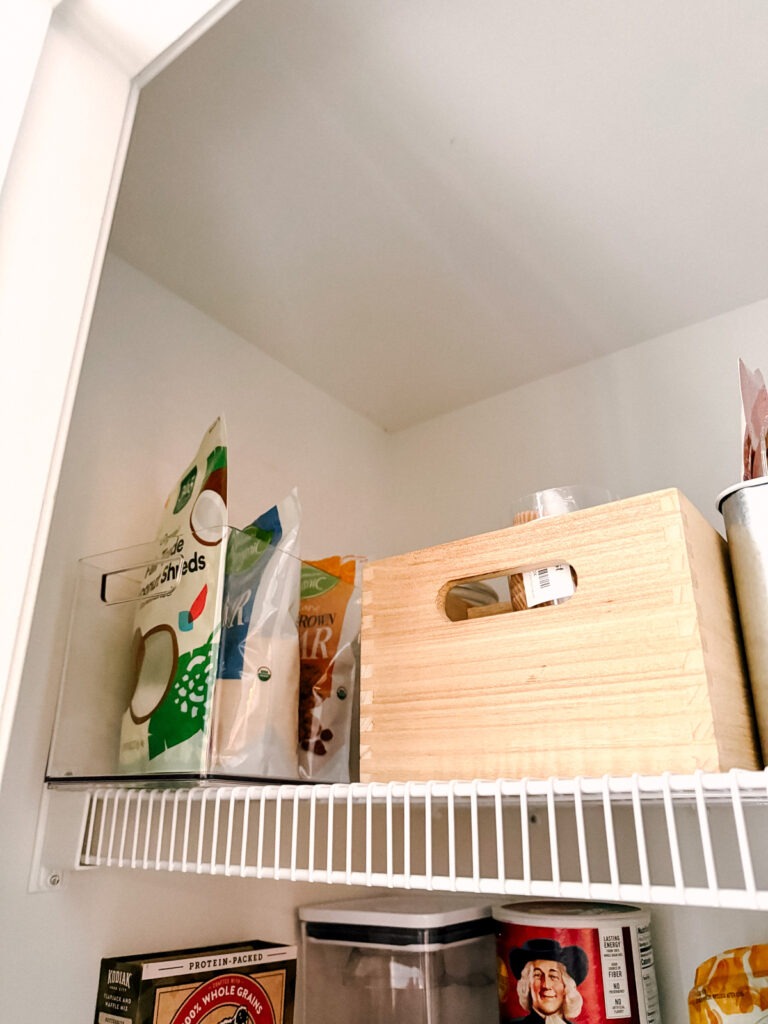
I organize by category, similar to how a grocery store is laid out:
- Breakfast foods (cereal, oatmeal, pancake mix)
- Baking supplies (flour, sugar, baking basics)
- Grains and pasta
- Canned goods
- Snacks
- Drinks
You don’t need a million categories—just enough so things don’t pile up randomly. I customize this based on what I actually eat. Snacks get more space. Baking gets less. And I also plan the shelves accordingly. Everyday items get eye-level and less-used categories go up high or down low.
Step 3: Maximize Every Inch With Smart Storage
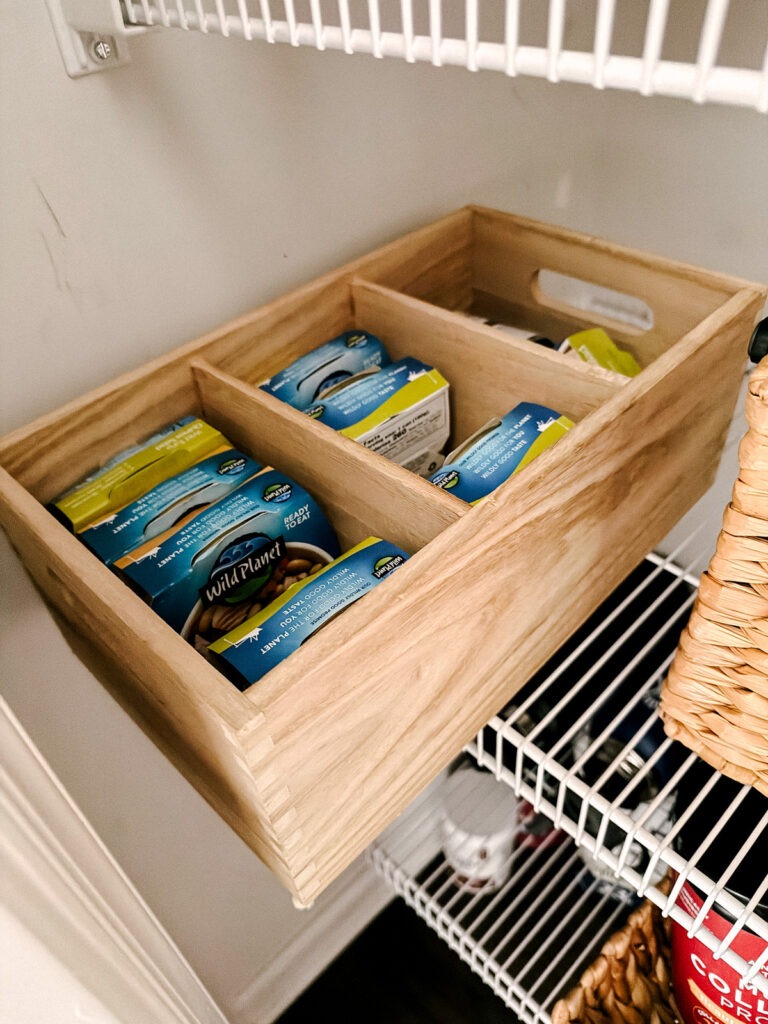
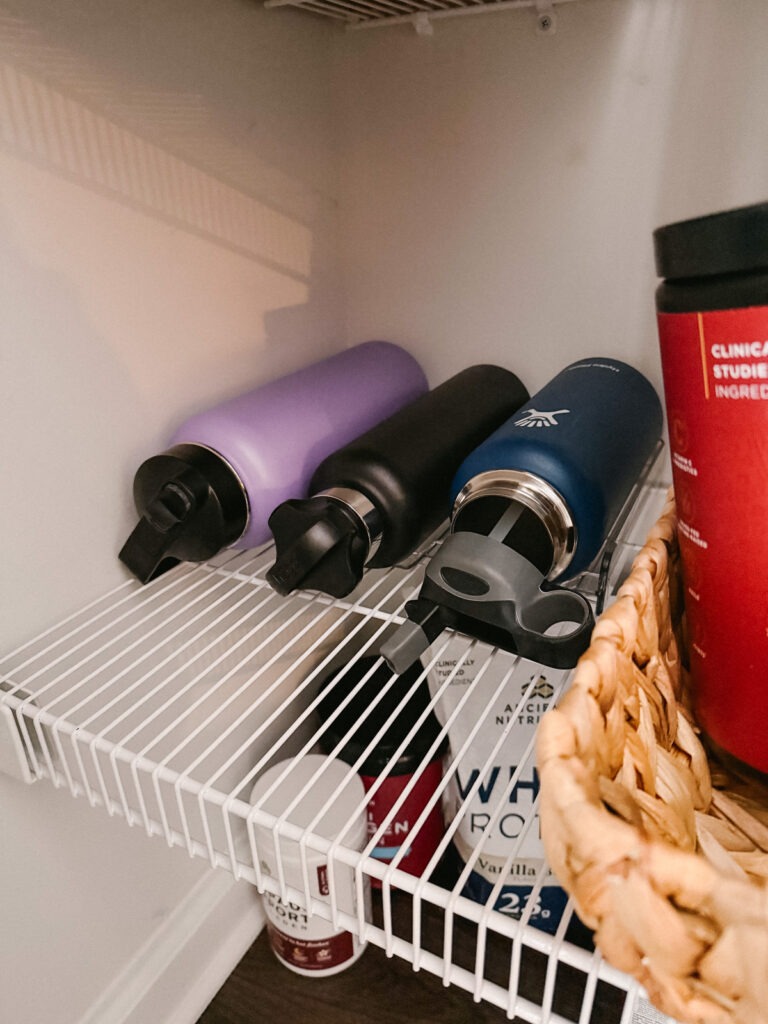
In a closet-style pantry, vertical space is everything. With wire shelves, I also don’t want loose things falling through the cracks or toppling over, so I have some wooden boxes and baskets that I love. Plus, a water bottle holder!
Divided + Clear Storage Containers
This is where I spend most of my organization budget, and it’s worth it. Decanting dry goods into clear, airtight containers saves space and lets me see exactly what I have.
I decant staples I always keep on hand—granola, nuts, oats, flour, and snacks, like goldfish and bars. The space savings alone are huge, especially compared to bulky cardboard boxes.
What I don’t decant? Items I buy occasionally or that have a fantastic container (like zip bag protein powder or oats in a canister).
Similar wooden bin to mine
Lazy Susans
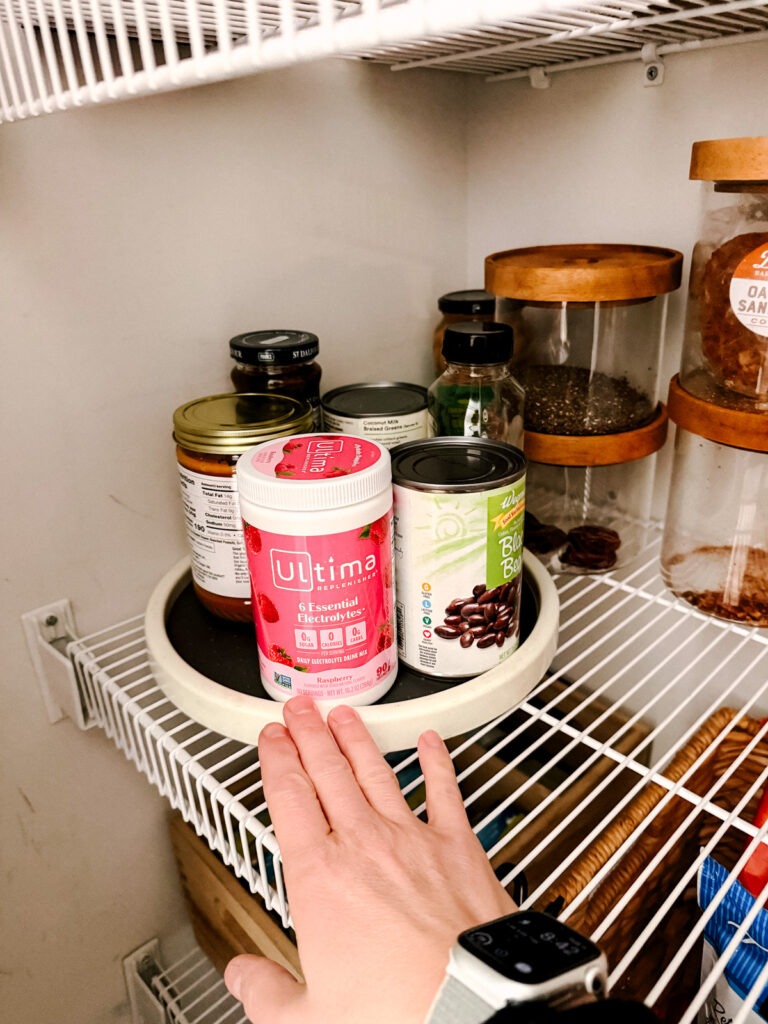
Lazy Susans are non-negotiable in a small pantry. I use them for oils, vinegars, and sauces so nothing gets lost in the back. One spin and I can see everything.
Bins and Baskets
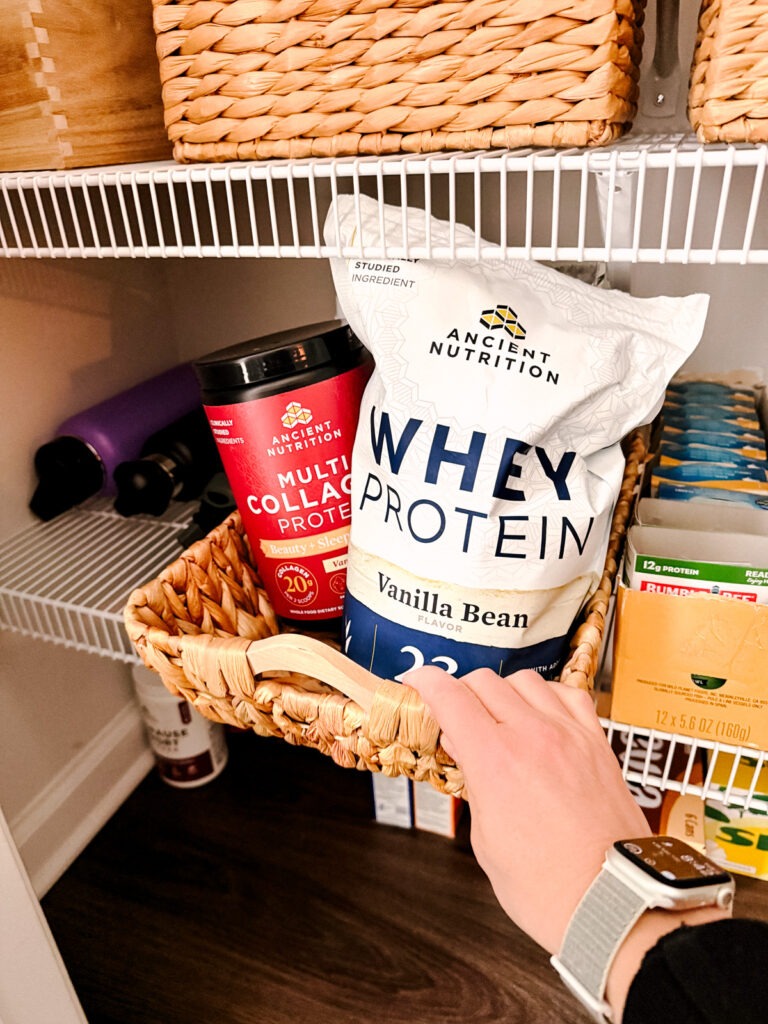
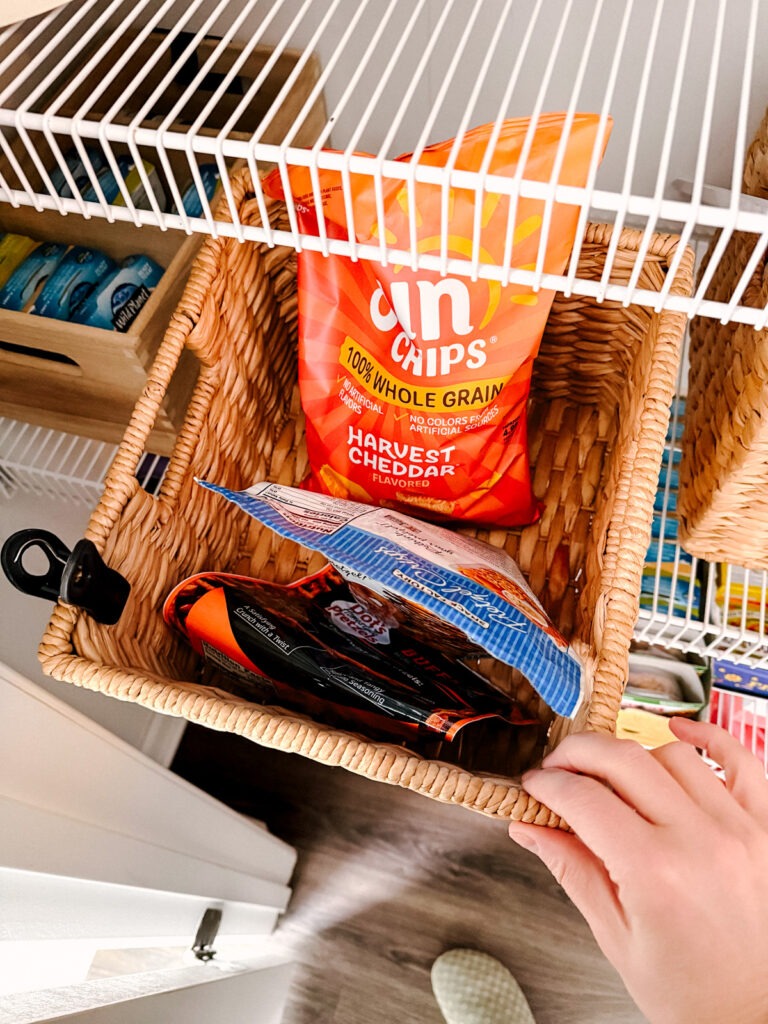
Bins keep loose packages from taking over shelves. I use labeled bins for snacks and backstock so everything stays contained instead of spreading.
I also have a “smoothie basket” that I can take out as a whole when making smoothies with multiple powders, etc.
Over-the-Door Storage
The back of the pantry door is prime real estate. I haven’t installed a door unit yet, but I would love to, especially one like this that goes over the door. TBD if I’ll stay in this place longer term, but for now I’m ok just using the shelves.
Step 4: Be Strategic About Placement
Once everything is contained, placement matters.
- Eye level: Everyday essentials
- Bottom shelves: Heavier items and grab-and-go snacks
- Top shelves: Items I only use occasionally
Step 5: Labels Help!
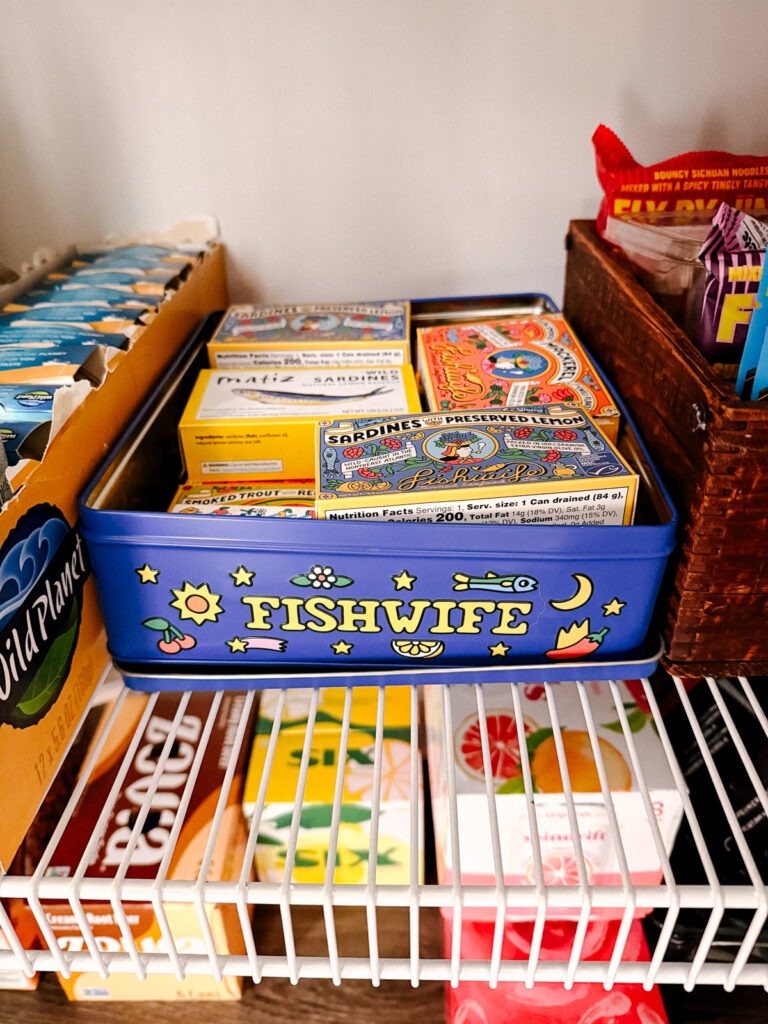
Labels are what keep the system working long-term. Labels are pretty and practical, especially to help family members put things back where they belong or find them when they need them. Since it’s just me doing most of the cooking, I haven’t labeled everything at the moment because I know where everything is, but I may still do this. I do like adding expiration dates to containers, especially for baking supplies.
Small Pantry Organization Tricks I Swear By
- Store items like a grocery store with labels facing forward
- Remove bulky cardboard packaging immediately
- Use magazine holders for foil, parchment paper, and boxed items
- Add battery-powered lighting if your pantry is dark
These little tweaks make a big difference in a small space.
How I Keep It Organized
Organization only works if it’s maintainable. My routine is simple:
- Weekly: Put things back where they belong, especially after a grocery store trip.
- Monthly: Quick expiration check and donate / toss anything that is not going to be used or just crumbs are left.
- Seasonally: Mini reset and reassess – should you reorganize?
Similar Hyacinth Baskets
FAQs For Small Pantry Organization
How do you organize a pantry with very little space?
When space is limited, the key is being intentional about what you keep and where it lives. I focus on pantry staples I actually use, group everything into clear categories, and use vertical storage as much as possible. Clear containers, bins, and lazy Susans make it easier to see what I have so nothing gets forgotten in the back.
Water Bottle Holder
Is it worth decanting food in a small pantry?
For me, yes—especially in a closet-style pantry. Decanting dry goods into clear containers saves space and makes everything easier to find. I stick to decanting everyday staples (like granola bars) and/or products that are harder to store in their original containers (like granola) and skip it for items I only buy occasionally or that fit well in their box (like cereal or pasta).
What’s the best way to organize a closet pantry?
I treat a closet pantry like a mini grocery store. Everyday items go at eye level, heavier or bulky items go lower, and rarely used items live up top. Using the back of the door for extra storage and adding lighting also makes a huge difference.
Get Started
If you’re working with a small or closet-style pantry, I promise it can be organized—and stay that way. Focus on what you actually use, give everything a home, and don’t aim for perfection. Aim for a pantry that makes your day a little easier. If your pantry feels overwhelming, you probably have too much food. I’m trying to be really smart about what I buy each week so I’m actually using what’s in mine instead of just adding to it.
And yes, I still admire my pantry when I open the door. Totally normal, right?
My Pantry Organizing Favorites

Desiree says
Thank you for this fantastic resource for the project I’m working on this week. The only closet I have in my apartment aside from my bedroom is in the hall btwn bed and bath so that has become my linen closet where I store my overabundance of beauty and personal care products which is another project for another day.
I have a smaller kitchen in this apartment than my previous one and fewer cabinets so keeping everything organized is a struggle. I also have ADHD so I struggle with object permanence and buy things that I already have, but have forgotten about b/c if I can’t see it, it doesn’t exist.
I purchased a simple open shelving unit with wire shelves so I can better organize things and keep it visible so I know what I have and can put it to use creating meals.
I also “Inherited” a great deal of canned and boxed food from my ex who was a prepper of sorts when he moved out so I have even more than I can effectively store in a small kitchen with no pantry.
I can’t wait to put your recommendations to good use and start bringing more joy and less stress into my cooking sessions.
Kath Younger says
Great tips from you too!