



Beautycounter is back and rebranded as COUNTER! Read my updated 2025 blog post about it here.
With summer around the corner, our sunscreen stash is stocked and ready! I’m sharing why we’re serious about using safe and effective sunscreen for the whole family.
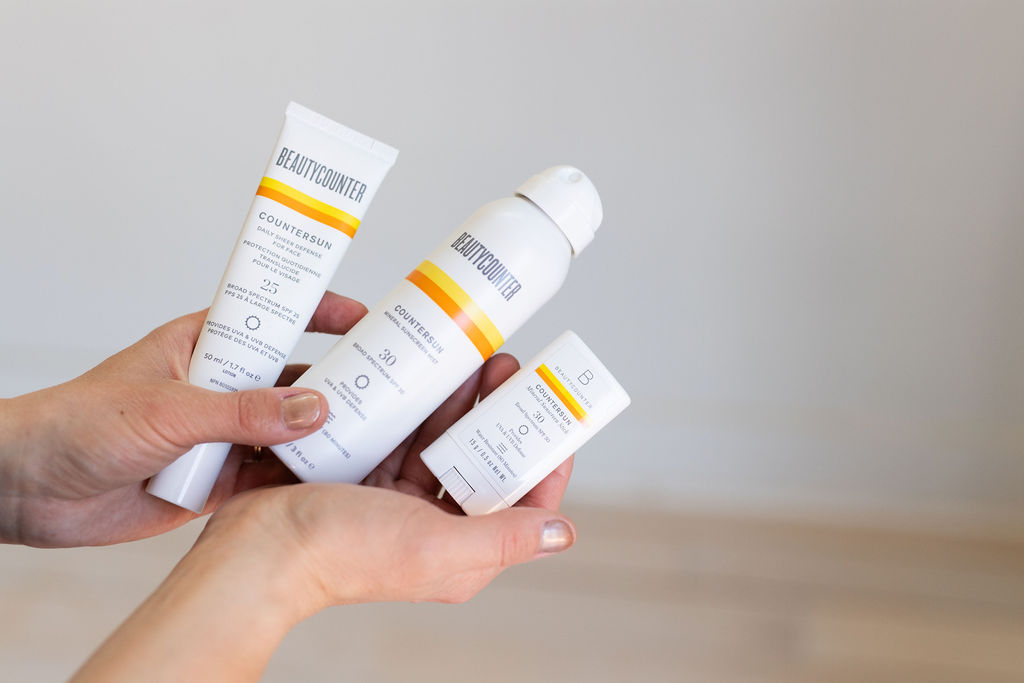
As you probably know, it’s important to use sun protection and broad spectrum SPF even on cloudy days!
How I Switched To Safe Sunscreen
We went to the Florida Keys when Birch was about 6 months old. I picked up some cheap chemical spray sunscreen at the grocery store while we were there, and I just felt really yucky about spraying it all over the kids and me. Not only did it bother me that I was covering myself in head to toe absorbable chemicals, but the cloud that I was breathing in as I sprayed us all down was not pleasant to inhale.
No one loves having to cover their body in sunscreen, yet we all know that sun protection is key to prevent sun damage that leads to risk of skin cancer and premature aging. Lotions can be goopy and sprays, while convenient, are packed with chemicals that endanger reefs. I knew I needed something that both felt good going on and felt good for my health and the planet.
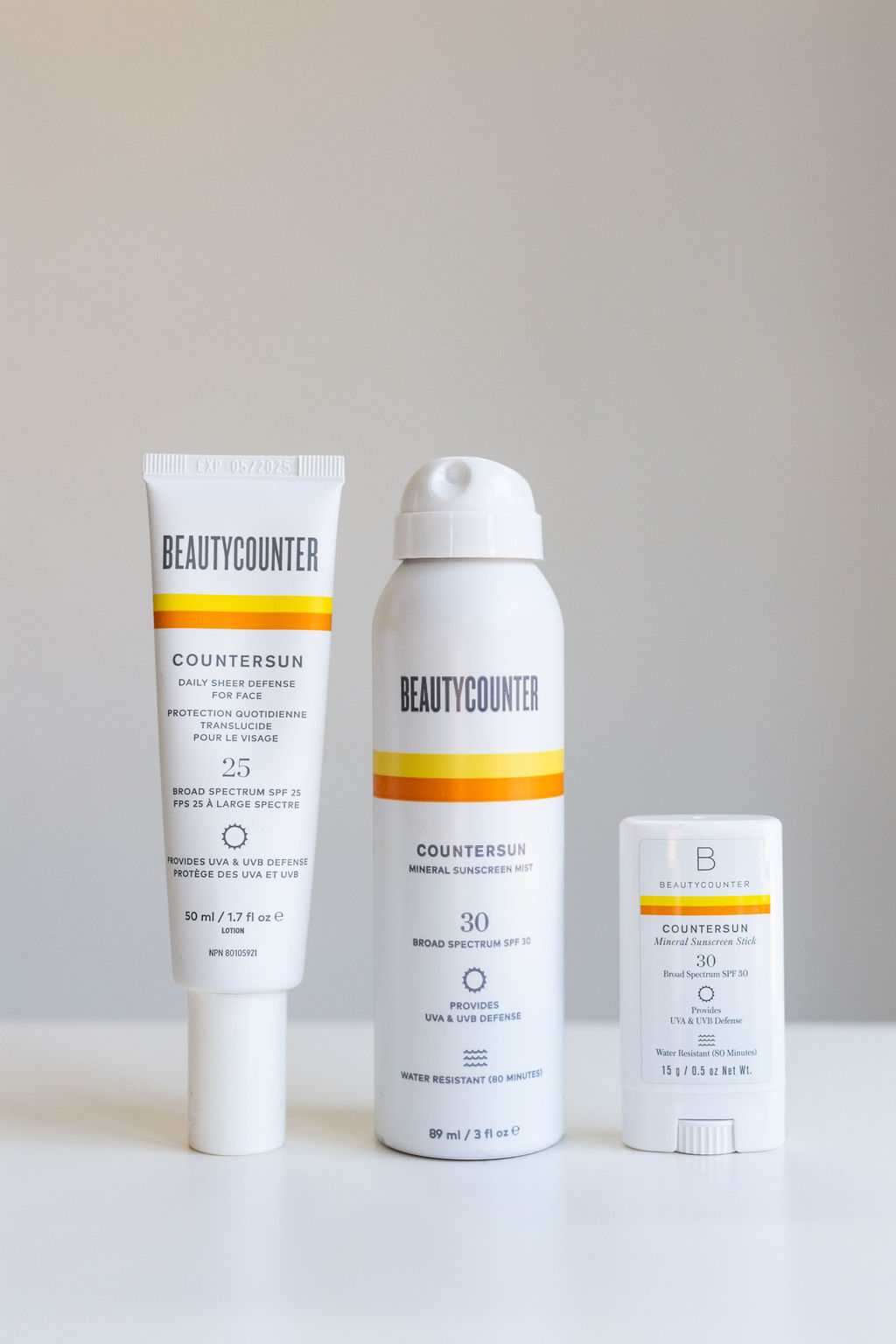
I started using Beautycounter sunscreen when I got home from the trip, which is now the brand Counter. You’ll see Beautycounter’s old versions in these pics, but I have since moved on to find other brands I like, too. Counter still has their amazing face sunscreen!
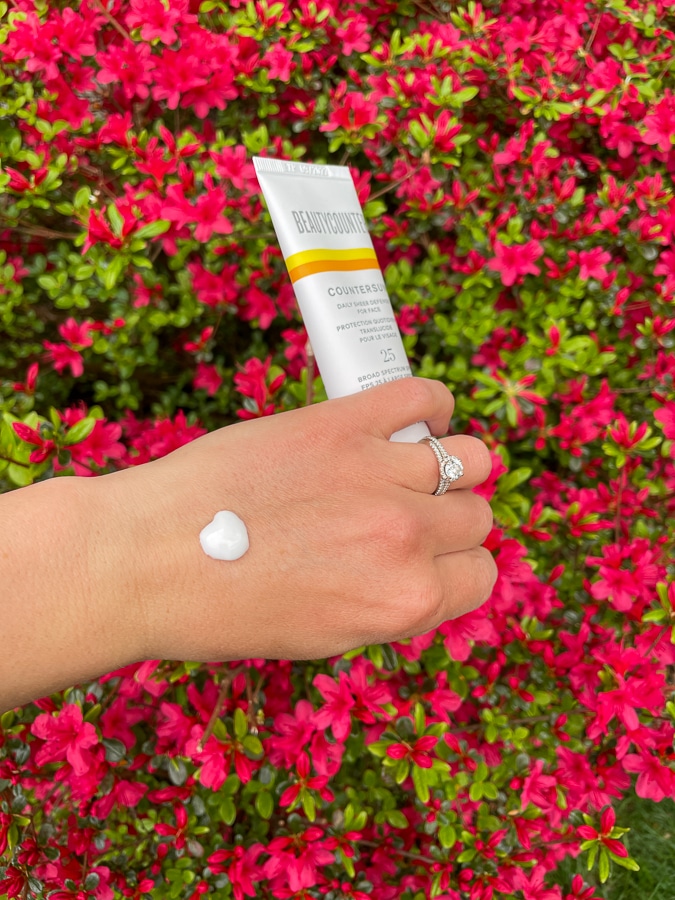
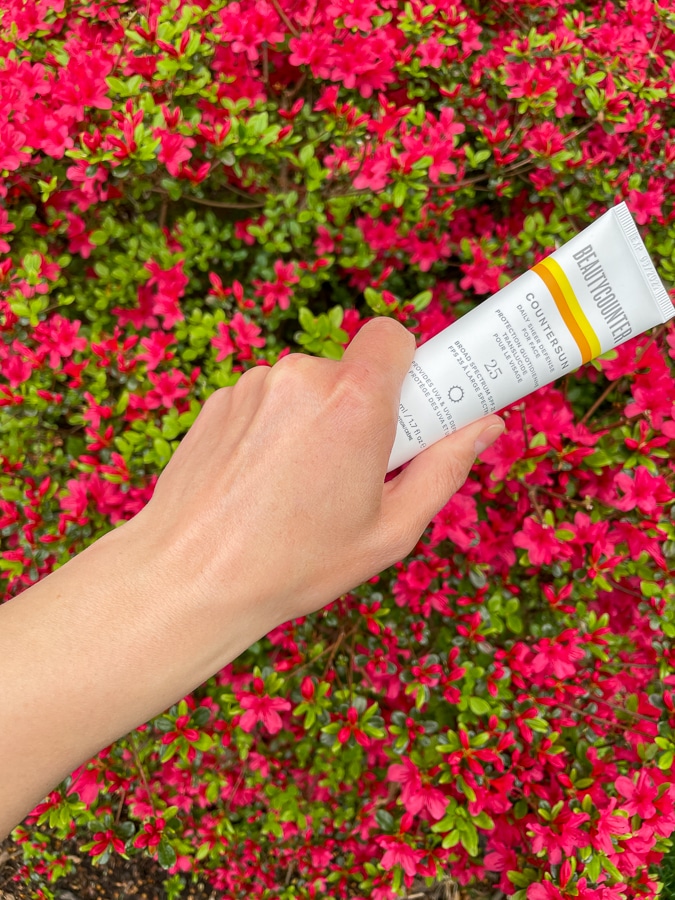
Counter’s Sheer Face Sunscreen is perfect for everyday use under makeup!
Safer Sunscreen 101
Sunscreen Basics
UVA = Sun’s Aging Rays
These rays penetrate deep into the skin to cause the free radical damage that contributes to premature aging and the skin cancer. They are present year-round and aren’t blocked by glass and clouds.
UVB = Sun’s Burning Rays
These rays are the primary cause of sunburn and skin cancer, so we see and feel the damage as it occurs.
Blue Light = Sun & Screen Rays
High-Energy Visible (HEV) blue light comes not just from the sun, but also smartphones, tablets, and computer screens. It can cause skin damage, including visible signs of aging.
Higher SPF can = higher amounts of toxins
Little-known fact: higher SPFs do not always translate to higher sun protection factor. There is only a 1% difference in protection from SPF 30 to SPF 40 to SPF 50 and beyond that, the protection increases are negligible.
“Sunscreens with higher SPF values have higher concentrations of chemicals that can disrupt hormones, trigger allergic reactions or damage skin. They may also contain SPF boosters that simply mask the signs of damage caused by ultraviolet (UV) radiation, rather than protect you from it.” – Environmental Working Group
Chemical vs. Mineral Sunscreens
Chemical Sunscreens are technically sun filters because they absorb UV energy and release it back into the air as heat. They are popular because they provide easy, transparent blend-ability into the skin. But chemical sunscreens are the most commonly purchased sunscreen.
Mineral Sunscreens (physical sunscreens) are the safer sunscreen technology. Zinc oxide and titanium dioxide are physical particles that sit on the surface of the skin and scatter or reflect sun’s rays away from the skin. Mineral sunscreens are great for people with sensitive skin and they are reef friendly.
“The Food & Drug Administration announced that it has proposed a rule to declare mineral sunscreen ingredients as safe, specifically zinc oxide and titanium dioxide. The agency said 12 other chemicals commonly used in sunscreens need more research to determine if they can be officially listed as safe, including oxybenzone and octinoxate.” You can read the full article here.
The answer is not to stop wearing sunscreen. It’s to look for sunscreens that feature zinc and titanium dioxide as the active ingredients. It’s important to do your own research (I love the EWG.ORG/SKINDEEP database for its safety data on public health to see how toxic products are) and make the best choices for you and your family.
What Ingredients to Avoid in Sunscreen
Oxybenzone & Octinoxate
Chemical UV filters linked to coral reef damage and possible hormone disruption.
Retinyl Palmitate (Vitamin A)
May increase skin sensitivity and accelerate sun damage when exposed to UV light.
Parabens
Preservatives that can mimic estrogen in the body and contribute to endocrine disruption.
Synthetic Fragrances
Often contain undisclosed chemicals that can cause irritation or allergic reactions, depending on your skin type.
Do You Put Sunscreen on Before or After Moisturizer?
For face sunscreen, you generally put sunscreen on after moisturizer. Think of it like painting a wall: moisturizer is the primer, sunscreen is the protective topcoat.
- Moisturizer first – It hydrates your skin and helps lock in moisture, creating a smooth base.
- Sunscreen last – It forms a protective barrier on top, blocking UV rays. If you apply it underneath, your moisturizer could dilute or disturb that barrier.
- If you’re using a moisturizer with SPF, it can replace the two-step process (just be sure you’re applying enough for full coverage). Dew Skin and Wonderscreen are two of my favorites! Their are tinted too so you can match your skin tones without looking like a ghost.
How Often Should You Reapply Sunscreen?
Every bottle says this, but how often you actually reapply usually depends on the activity and type of sunscreen you are wearing (a zinc lotion is different than a chemical sunscreen).
The general recommendations are:
- Every 2 hours when you’re outdoors, even if you’re not swimming or sweating.
- Immediately after swimming, sweating, or towel-drying — even if the sunscreen is labeled “water-resistant.”
- If you’re wearing makeup: use powder or spray sunscreens for touch-ups without smudging. This powder has been highly recommended to me.
How Long Does Sunscreen Last?
If you’re refreshing your stash and are looking at last year’s bottles, you usually have about 3 years, but checking the expiration date is always best practice:
- Check the expiration date — if it’s printed, follow that first.
- No date? Assume it’s good for 3 years from purchase unless it’s been exposed to extreme heat.
- Signs it’s gone bad: changes in texture, smell, or separation of ingredients.
- Storage matters: keep it in a cool, dry place and avoid leaving it in a hot car or direct sun.
The Best Safe Sunscreens
I haven’t tried all of these, but they come recommended when I asked for recs! Each of these sunscreens supports a clean beauty ethos—mineral-based, free from oxybenzone and octinoxate, and formulated with conscientious ingredients.
A clean, vegan, and cruelty-free mineral sunscreen with 19% zinc oxide. It’s broad-spectrum, non-greasy, non-whitening, lightweight, and reef-safe—designed to feel like your second skin, not a barrier Why it’s great: Loved for its everyday ease, it delivers dependable protection without white cast or makeup-fighting residue. I LOVE the Tinted version – it’s so easy to apply and blend because it’s almost a gel-like texture!
Counter Dew Skin Tinted Moisturizer SPF 20
A multitasking tinted moisturizer offering sheer, dewy coverage with mineral SPF 20. Enriched with black currant seed oil, peony root extract, and vitamin C to brighten and boost radiance over time. Lightweight, glowy, and perfect for minimalists. This was my favorite for years, and I’m using the 2.0 version by Counter!
Crunchi Sunlight Facial SPF 30
This non-nano zinc SPF 30 is EWG-Verified and designed for all skin types, blending into skin effortlessly without a white cast. It received the 2022 Healing Lifestyles Earth Day Beauty Award and offers a lightweight, non-greasy, nourishing finish. I don’t like it quite as much as Counter’s face sunscreen, but it’s on this list of ones to try! Why it’s great: Perfect for your face—clean, invisible protection that layers nicely under makeup and wins at both safety and feel.
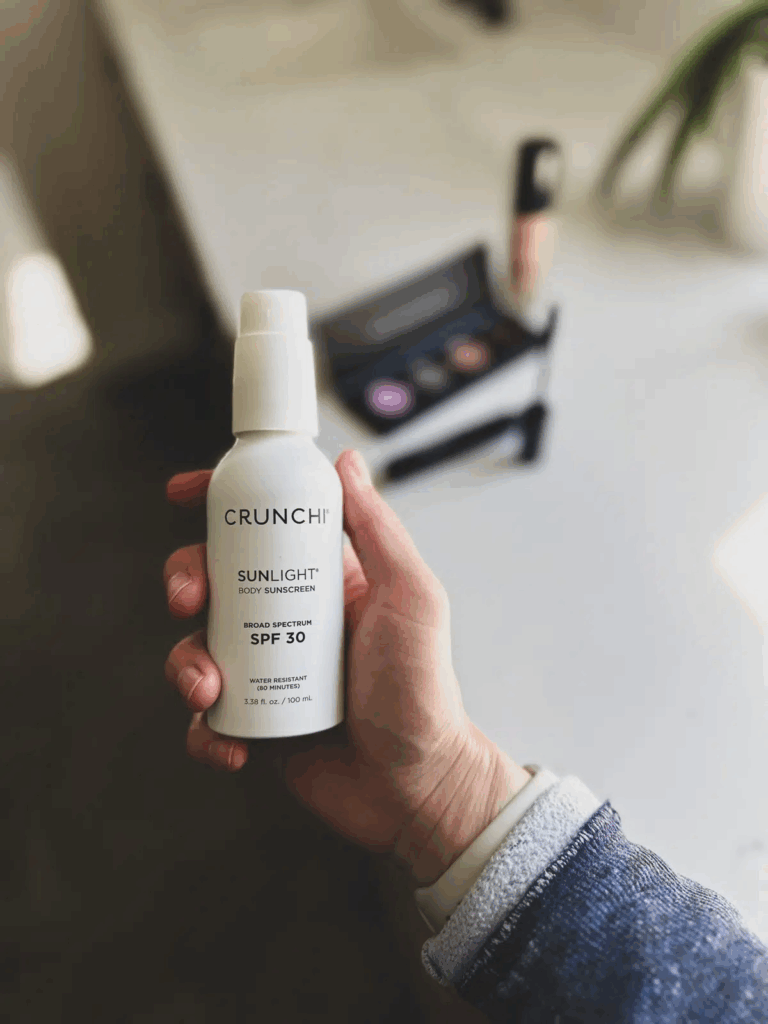
Crunchi Sunlight Body SPF 30
This body SPF also uses non-nano zinc oxide, includes upcycled squalane for hydration, delivers up to 80 minutes of water resistance, and comes packaged in infinitely recyclable aluminum. Why it’s great: A clean, eco-friendly body sunscreen—powerful, sustainable, and beautifully glides on without ghostly residue.
Colorescience Total Protection No-Show Mineral SPF 50
Ultra-sheer with EnviroScreen® technology, this mineral option protects against UVA/UVB, blue light, infrared, pollution, and free radicals. Makeup lovers will appreciate its invisible, weightless finish. Why it’s great: Next-level everyday protection that doesn’t compromise on feel or coverage.
Solara Suncare Go! Daily Defense Mineral SPF 30
This lightweight, clean sunscreen moisturizes while protecting. It’s infused with aloe, antioxidant-rich green tea, and lactobacillus ferment to nourish and soothe. Why it’s great: Ideal for those seeking daily mineral SPF that calms sensitive or breakout-prone skin without unwanted ingredients.
Earth Harbor Eclipse Sheer Mineral SPF 30
A reef-safe, non-nano sunscreen blended with macroalgae and green tea extract for environmental and blue-light protection, it melts in without a trace. Why it’s great: A thoughtful choice for eco-conscious users who want clean, smooth, broad-spectrum coverage.
Supergoop! Mineral Mattescreen SPF 40
Combines zinc and titanium for mineral sun protection with a matte, blur finish that controls shine and hides pores. Excellent for oily or combo skin. Why it’s great: A multitasking matte mineral SPF that protects while keeping excess oil and pore appearance in check.
Learn more about safer sunscreen:
Nancy says
I have CounterSun lotion left over from last summer. Can I safely use it this summer?
Kath Younger says
There should be an expiration date on the bottom of the tube or spray – if that’s good then yes!