



Learn how to exfoliate your face properly with this post. Discover the benefits of exfoliating, how often to do it based on your skin type, and the best products and techniques for removing dead skin cells and improving skin tone.
If there’s one thing I’ve learned after years of writing about wellness, routines, and the little habits that make daily life feel good, it’s that skincare is a lot like nutrition: consistency matters way more than perfection. Exfoliation was one of those things I didn’t really know about when I was younger. But since learning more about skincare, I’ve realized that exfoliating the face is one of the most important steps in keeping skin looking bright and healthy.
The tricky part is finding the sweet spot for your skin. If you exfoliate your skin too often and you can end up irritating it, especially if you have sensitive skin. Skip it for too long and you might notice dullness, uneven skin tone, or more dark spots. I tend to use a chemical exfoliator 2-3 times a week and a physical one (a scrub or mask) once a week. My skin is dry and much more than that can make it worse.
Today I’m sharing a complete guide on how to exfoliate face the right way so you can get that smooth, glowing result without overdoing it.
How to Exfoliate Your Face
Before jumping straight into the step-by-step how-to, I want to start with the why. Understanding the benefits of exfoliating the face can make it easier to choose the best products and method for your skin type. When you know what exfoliation is actually doing for your skin—beyond just making it feel smoother—it becomes easier to stick with it regularly.
What Does Exfoliating Your Face Do?
Removes Dead Skin Cells
The biggest job of exfoliation is removing dead skin cells that naturally accumulate on the surface of your skin. Our skin is constantly renewing itself, but sometimes those cells hang around longer than they should. When that happens, skin can look dull or uneven. Exfoliating helps clear away that buildup so fresh skin underneath can shine through. This is one reason your complexion often looks brighter right after exfoliating.
Improves Skin Tone
If you’ve ever struggled with uneven skin tone or lingering dark spots, exfoliation can help speed up the fading process. By encouraging cell turnover, exfoliating gradually reveals newer skin layers that look more even.
Keeps Pores Clear
Certain ingredients used in chemical exfoliation, especially salicylic acid and other beta hydroxy acids, can actually penetrate pores and help clear out buildup. This is why they’re so popular in acne-focused products.
Helps Products Work Better
When dead skin cells sit on the surface, they can create a barrier that prevents serums and moisturizers from fully absorbing. After exfoliation, your skincare products often work more effectively because they can reach the skin more easily.
Smooths Texture
Finally, exfoliating simply makes skin feel smoother. Whether you’re using a physical exfoliant for mechanical exfoliation or opting for chemical exfoliation, the result is softer, more polished skin. It’s one of those small skincare habits that can make a noticeable difference.
How Often Should You Exfoliate Your Face?
The ideal frequency really depends on your skin type. For most people, exfoliating two to three times per week works well. That’s enough to keep skin smooth without over-stripping it.
If you have sensitive skin, you might want to stick with once or twice a week and choose a gentler method like a mild chemical exfoliant only. Ingredients like beta hydroxy acids or low-percentage acids can offer effective exfoliation without harsh scrubbing.
Those with oilier or acne-prone skin may tolerate exfoliation more frequently, especially when using products with salicylic acid. I can tolerate more during the summer months when I’m wearing more sunscreen and sweating more.
If you tend toward dry skin, I’ve found it’s best to exfoliate less frequently and focus on hydration afterward. Over-exfoliating can make dryness worse, which is definitely not the goal.
The biggest clue that you’re exfoliating too often is irritation—redness, tightness, or increased sensitivity.
When To Exfoliate Your Face
Most people use chemical exfoliators at night, and I’m definitely in that camp.
Evening exfoliation works well because your skin goes into repair mode overnight. After removing makeup and cleansing your face, exfoliating helps clear away the day’s buildup before applying serums and moisturizer.
Morning exfoliation for me tends to be a very gentle cleanser with beads in the shower. More on that below.
What To Use To Exfoliate
There are a few different options when it comes to choosing the right product. The best one depends on your skin type and the type of exfoliation you prefer. I would say that using ALL of these at once is probably too much, so choose the ones you think you’d like the best.
Exfoliating Cleanser
An exfoliating cleanser is a nice option if you want something quick and easy in your routine. Some contain mild acids, while others include tiny polishing beads. They work similarly to a regular face wash but add an exfoliating element. I like that it’s an all-in-one gentle solution.
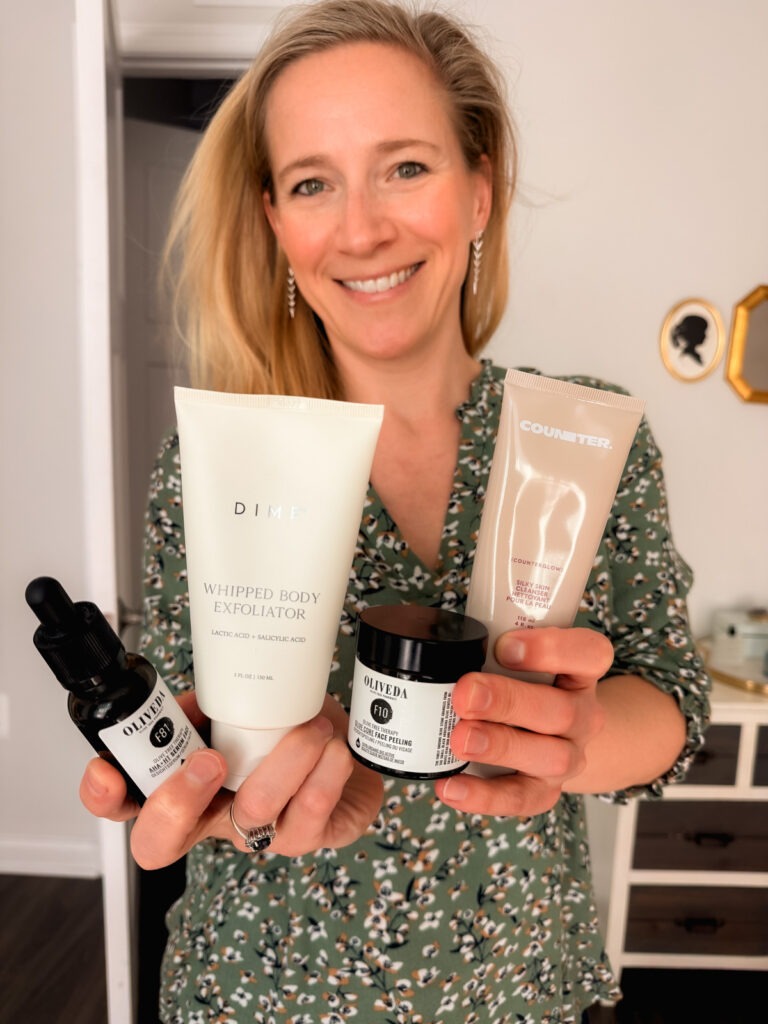
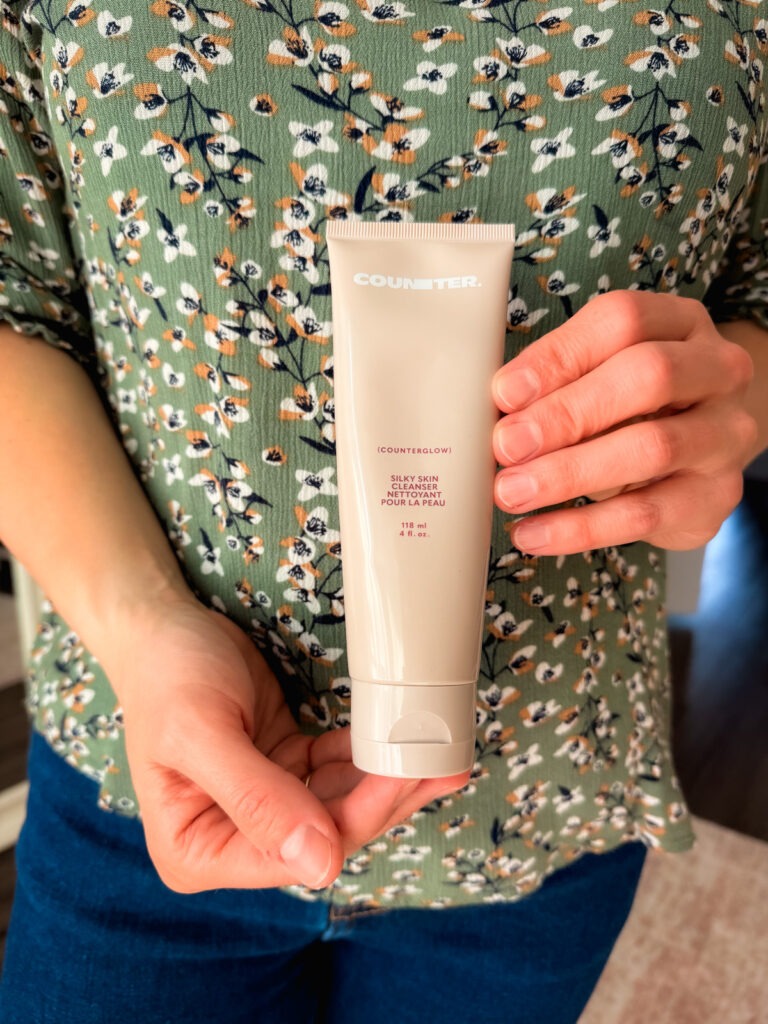
My Favorite: Counterglow Silky Skin Cleanser. It has tiny microbeads that feel productive without being rough at ALL. Plus specialized hyaluronic acid that clings to skin and continues hydrating after cleansing.
Gentle Facial Scrub
A facial scrub is the classic physical exfoliant. Choose this if you have another cleanser you love but want to add exfoliation as needed. These products contain tiny particles that help buff away dead skin cells through mechanical exfoliation. I think all of the 90s gals remember the St. Ives Apricot Scrub?! That one was a little too rough! The modern scrubs are much more gentle. The key is choosing one with very fine particles so you’re polishing your skin – not scratching it. When using a scrub, apply it to damp skin and gently massage in circular motions before rinsing.
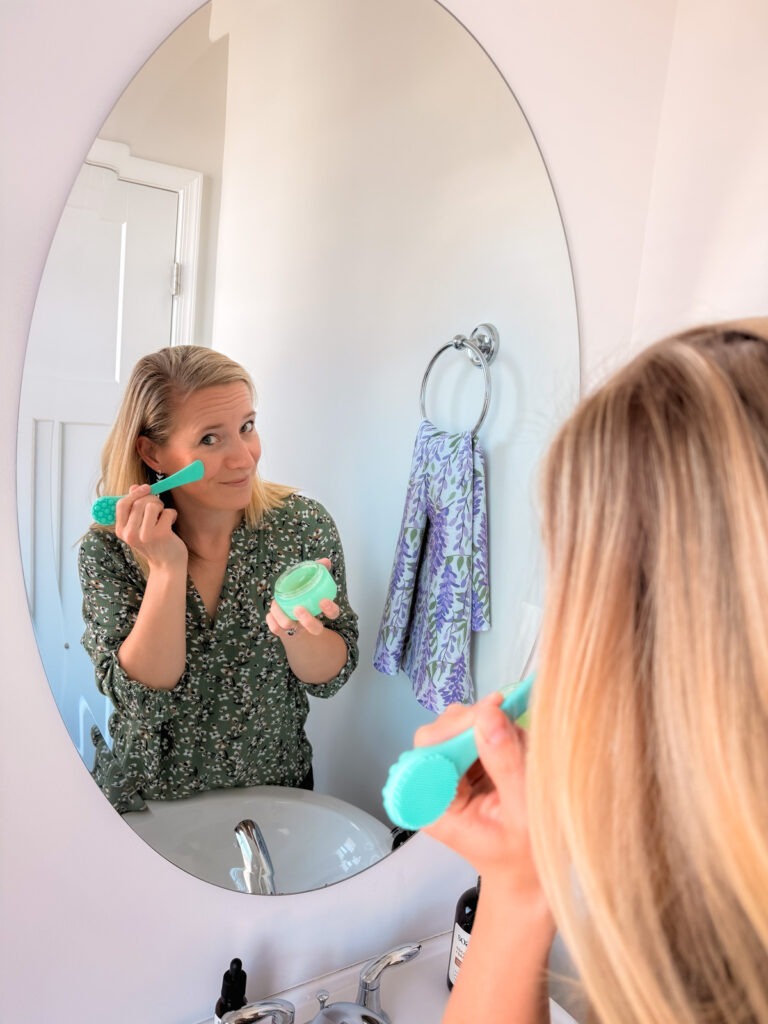
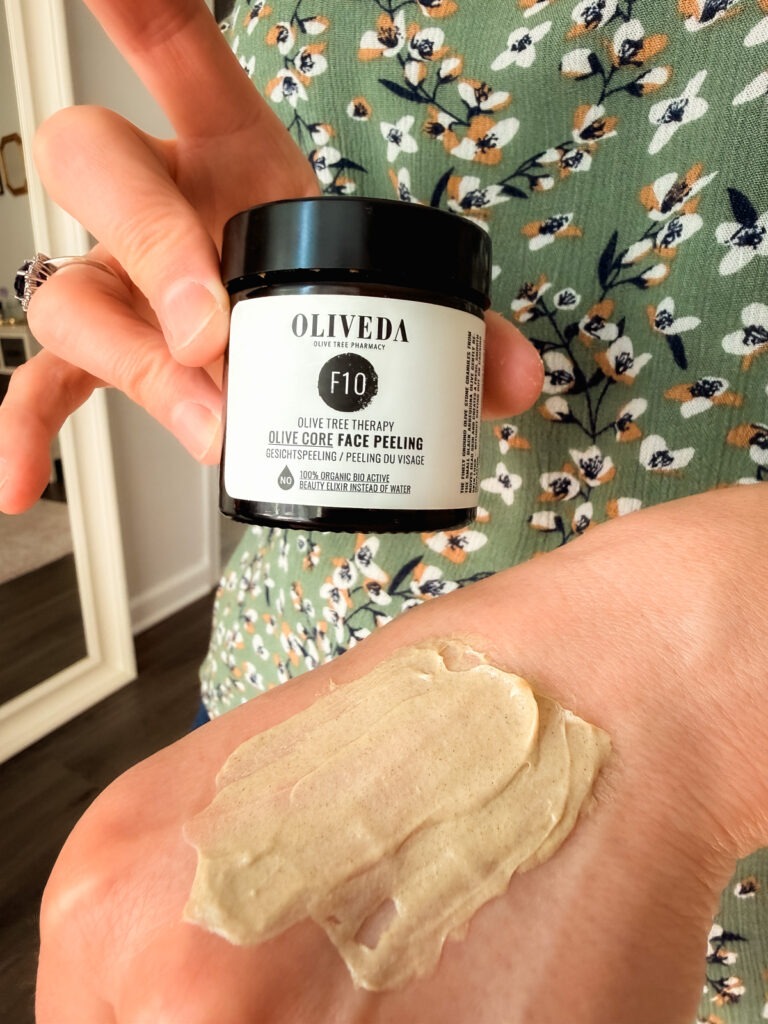
My Favorite: Oliveda Olive Core Face Peeling. I love this scrub as a once a week treatment. It features olive leaf extract plus finely ground olive pit granules from the Arbequina olive gently sloughs away dead skin. I let it sit on my face for a minute or two like a mask + scrub in one.
Chemical Exfoliating Serums
Chemical exfoliating serums are one of my favorite ways to exfoliate because they’re simple to add into a nightly routine and tend to be very effective. Instead of scrubbing the skin like a physical exfoliant, these formulas use ingredients like alpha hydroxy acids or beta hydroxy acids to gently dissolve the bonds between dead skin cells so they can shed more easily. (You’ve probably seen AHA and BHA on labels.)
They’re also a nice option for people with dry skin or sensitive skin who may not tolerate mechanical exfoliation very well. When used consistently a few nights per week, chemical serums can help keep skin looking smoother and more radiant without any scrubbing.
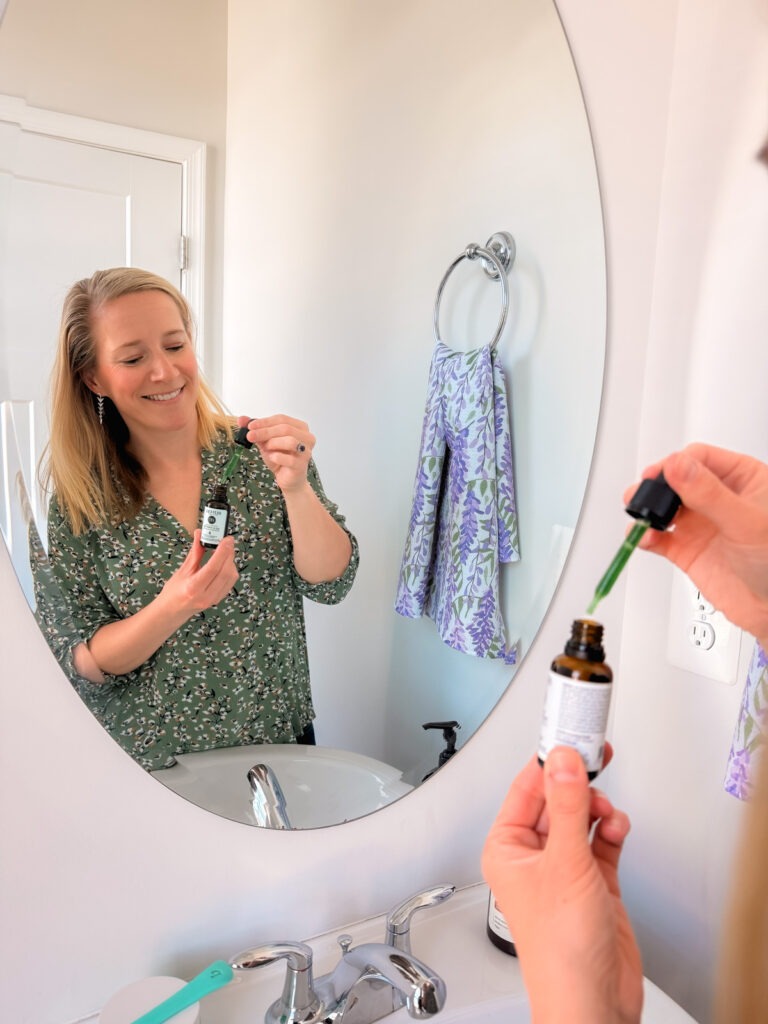
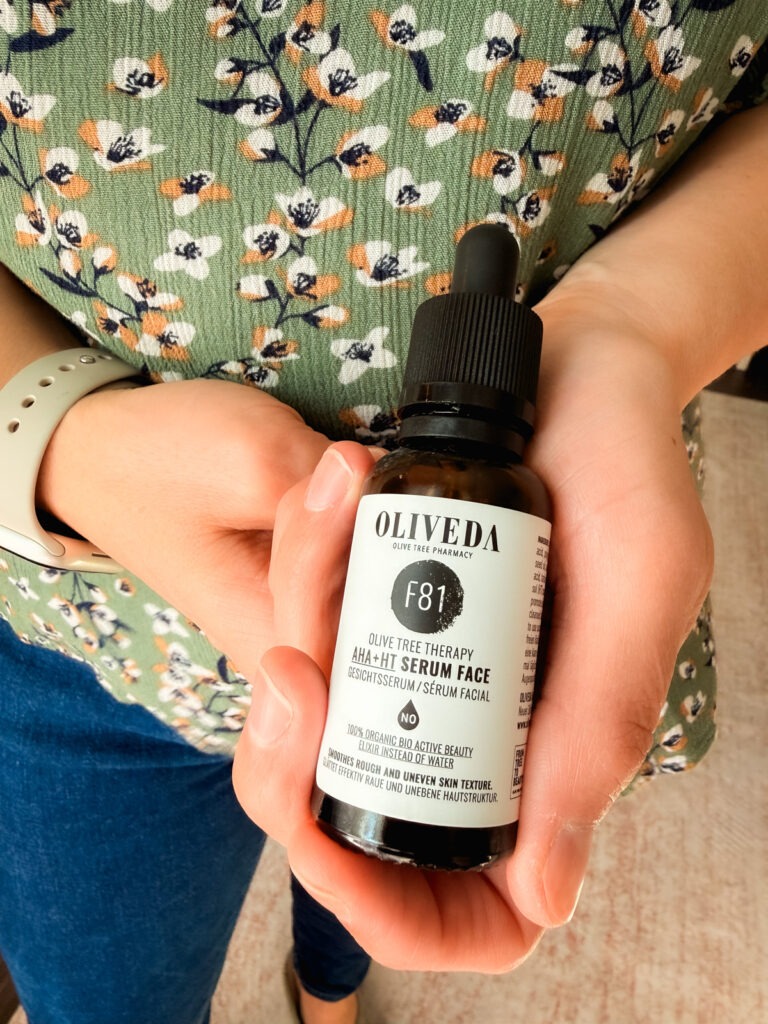
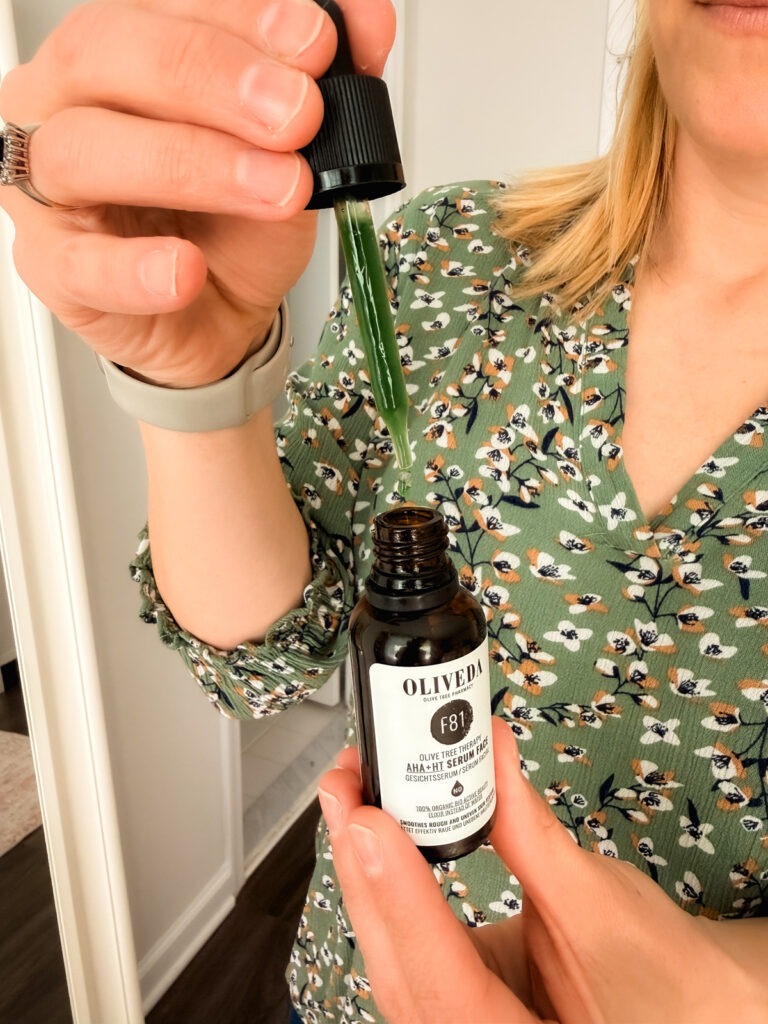
My Favorites: Oliveda F81 AHA + HT Serum + Counter Overnight Resurfacing Peel. This type of chemical exfoliation works gradually to smooth texture, brighten skin tone, and help fade dark spots over time. I like that serums feel lightweight and absorb quickly, so you can layer moisturizer right on top. I use them 2-3 times a week at night.
Exfoliating Masks
Exfoliating masks are another great option, especially if you prefer a weekly product instead of daily. These masks usually contain acids that provide chemical exfoliation, helping with removing dead skin cells and improving skin tone. The AHA mask mentioned below has some physical texture too.
Because they’re typically left on the skin for a short period of time before rinsing off, exfoliating masks can deliver a more noticeable smoothing effect right away. They’re great for refreshing your complexion and helping your other skincare products absorb better afterward. Sometimes the acids can sting/burn a little, which is normal! That means they’re working.
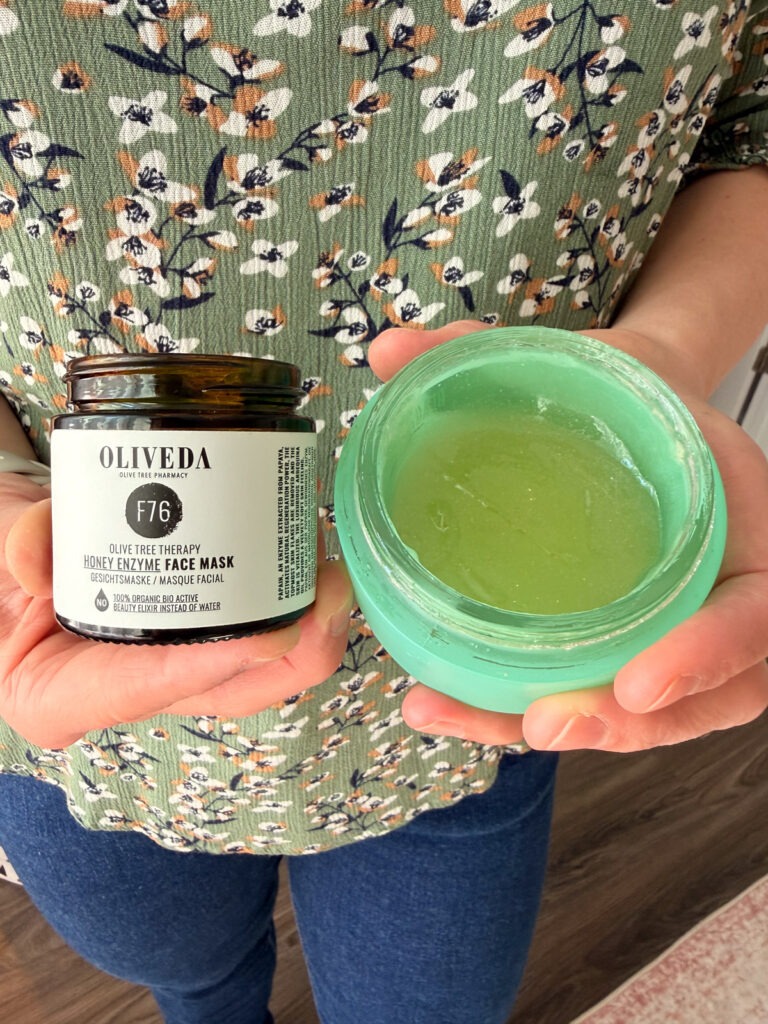
My Favorites: Counter AHA Smoothing Mask and Oliveda Honey Enzyme Face Mask. I have always loved the texture of the Counter mask – a gel-like cooling application with little scrubbers made from bamboo when you wash it off. And the Oliveda mask has papain enzymes from papaya to remove dead skin cells, refine pores, and leave a radiant complexion. Honey moisturizes and soothes. There is also Arbequina oil to leave a velvety soft skin feeling when you rinse it off.
Exfoliating Body Wash (for Neck & Chest)
While this post focuses on the face, don’t forget that the neck and chest can benefit from exfoliation too. A gentle body wash with exfoliating ingredients can help keep that area smooth and even in tone.
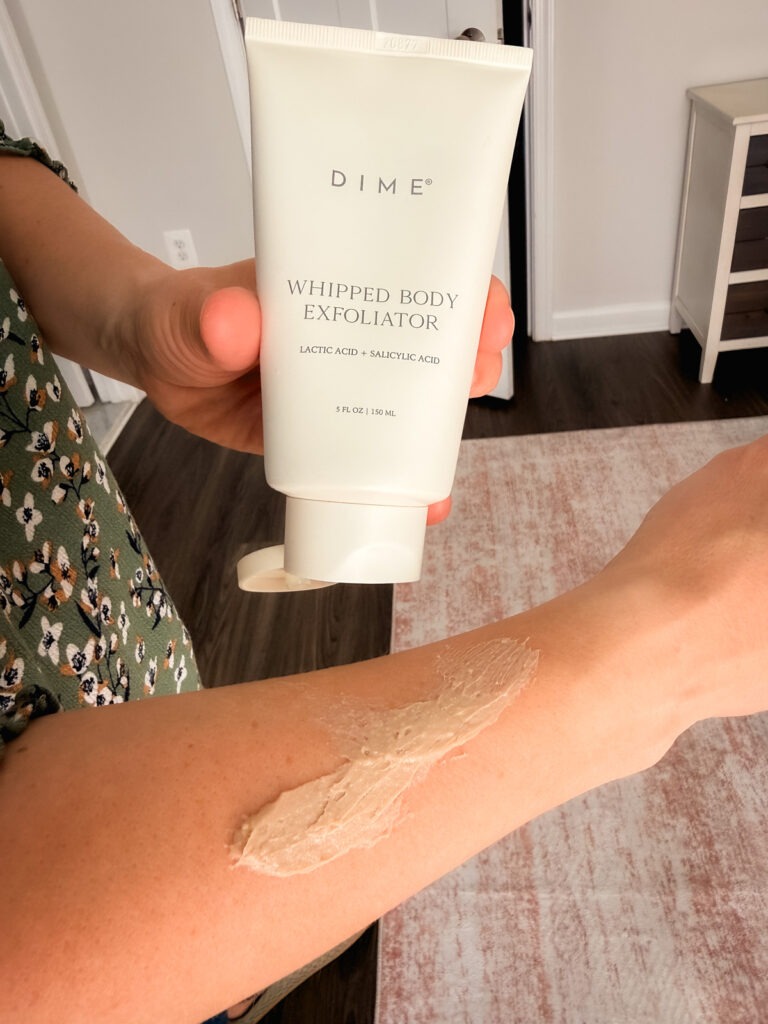
My Favorite: Dime Whipped Body Exfoliator. This one has lactic and salicylic acid and microbeads to gently polish. (RIP Beautycounter Lemongrass Scrub 🙁 )
If you’re looking for more product recommendations, I’ve shared several favorites in my roundup of skincare exfoliator products that I personally love: Skincare Exfoliators I Love.
How To Exfoliate Your Face
Now for the step-by-step process:
Start With Clean Skin
Always begin by washing your face with a gentle cleanser. This removes makeup, sunscreen, and oils so your exfoliating product can work directly on the skin. Unless you’re using an exfoliating cleanser – that’s an all-in-one! Pat your skin slightly damp if you’re using a scrub, or completely dry if you’re applying a chemical exfoliant.
Use Gentle Circular Motions
When applying a physical exfoliant, use light circular motions with your fingertips. No need to scrub aggressively – just let the product do the work. Over-scrubbing can irritate the skin and actually cause redness or micro-damage. Think of it more like polishing than scrubbing.
Don’t Overdo It
One of the most common mistakes is exfoliating too often. Your skin needs time to recover and renew the cells. Stick to your routine and resist the urge to exfoliate daily unless the product is specifically designed for that.
Moisturize Immediately After
After exfoliating, your skin is primed to absorb moisture. Apply a hydrating serum or moisturizer right away to help support the skin barrier. This step is especially important if you have dry skin or are prone to sensitivity.
Always Wear Sunscreen
Freshly exfoliated skin can be slightly more sensitive to the sun. Make sure to apply sunscreen the next morning to protect your skin and prevent new dark spots from forming!
Skincare is one of those routines where the little steps add up. Exfoliating regularly can help improve skin tone, smooth texture, and keep your complexion looking bright and healthy
Leave a Reply